
Toyota Check Engine Light: What to Do in Lumberton, TX
Toyota check engine light on? Learn the most common causes, what's safe to drive, and when to get service in Lumberton, TX — a practical 2026 guide.

If your Toyota's check engine light just came on, here's the short answer: a steady light means you should get the code scanned within a few days but can usually keep driving carefully; a flashing light means stop driving as soon as safely possible and get service the same day. The most common causes are a loose gas cap, a failing oxygen sensor, a bad mass airflow sensor, worn spark plugs or ignition coils, or a catalytic converter issue.
Why is my Toyota check engine light on?
A Toyota check engine light turns on when the onboard diagnostics (OBD-II) system detects a fault in the engine, emissions, or transmission that falls outside factory specifications. It stores a diagnostic trouble code (DTC) that a scanner reads to pinpoint the issue. Causes range from a loose gas cap to a failing catalytic converter — cost and urgency vary widely.
Toyotas are known for reliability, but Southeast Texas driving conditions — Gulf Coast humidity, ethanol-blended fuel, stop-and-go summer traffic on US-96 through Lumberton — accelerate wear on emissions components, especially oxygen sensors and evaporative emissions (EVAP) system parts. That's why the same light that means "tighten your gas cap" for one driver can mean "replace your catalytic converter" for another.
Is a steady light different from a flashing check engine light on a Toyota?
Yes. A steady (solid) check engine light signals a non-critical fault — you can typically drive short distances and schedule service within a few days. A flashing check engine light indicates an active engine misfire severe enough to damage the catalytic converter within minutes. If the light is flashing, reduce speed, avoid heavy throttle, and get the vehicle to a service department the same day.
The service team at Donalson Toyota in Lumberton sees this distinction misunderstood constantly. Drivers ignore a flashing light for a week, then pay for a catalytic converter replacement that a same-day coil-pack repair would have prevented. Toyota's own owner literature draws the same line: steady = check soon, flashing = pull over and call for service.
What are the most common Toyota check engine light causes?
The most common causes, in rough order of frequency: a loose or failing gas cap, a bad oxygen (O2) sensor, a faulty mass airflow (MAF) sensor, worn spark plugs or ignition coils causing misfires, an EVAP system leak, a stuck EGR valve, or a failing catalytic converter. On higher-mileage Toyotas, VVT-i solenoids and thermostats also trigger codes.
| Likely Cause | Typical Symptom | Urgency | Estimated Repair Range |
|---|---|---|---|
| Loose/failed gas cap | No drivability change | Low — drive normally | $0–$40 |
| Oxygen (O2) sensor | Reduced MPG, rough idle | Moderate — 1–2 weeks | $200–$450 |
| Mass airflow sensor | Hesitation, stalling | Moderate — schedule soon | $250–$500 |
| Spark plugs / coils | Misfire, rough running | High if flashing light | $150–$700 |
| EVAP system leak | Fuel smell, no drivability issue | Low–moderate | $100–$600 |
| Catalytic converter | Sulfur smell, poor power | High — do not delay | $1,200–$2,500 |
Ranges reflect typical Toyota parts and labor pricing in the Southeast Texas market as of 2026 and vary by model, year, and whether OEM or aftermarket parts are used.
What should you do when your Toyota check engine light comes on?
Take five specific steps: (1) check the gas cap and tighten it until it clicks three times, (2) note whether the light is steady or flashing, (3) watch for symptoms like rough idle, misfire, or reduced power, (4) avoid heavy loads and highway speeds if the vehicle feels off, and (5) get the code scanned within a few days. Do not clear the code without diagnosing it.
If the light is steady and the car drives normally
Continue driving cautiously and schedule a diagnostic scan within the week. If the light turns off on its own after 2–3 drive cycles, it was likely a gas cap or minor sensor blip — but the code stays stored, and a technician can still confirm.
If the light is flashing or the car runs poorly
Reduce speed, turn off the A/C to lower engine load, and drive directly to a service facility or home. A flashing light with continued driving can destroy a catalytic converter — a $1,500+ repair on most Toyota models.
Where should Lumberton, TX Toyota owners get the check engine light diagnosed?
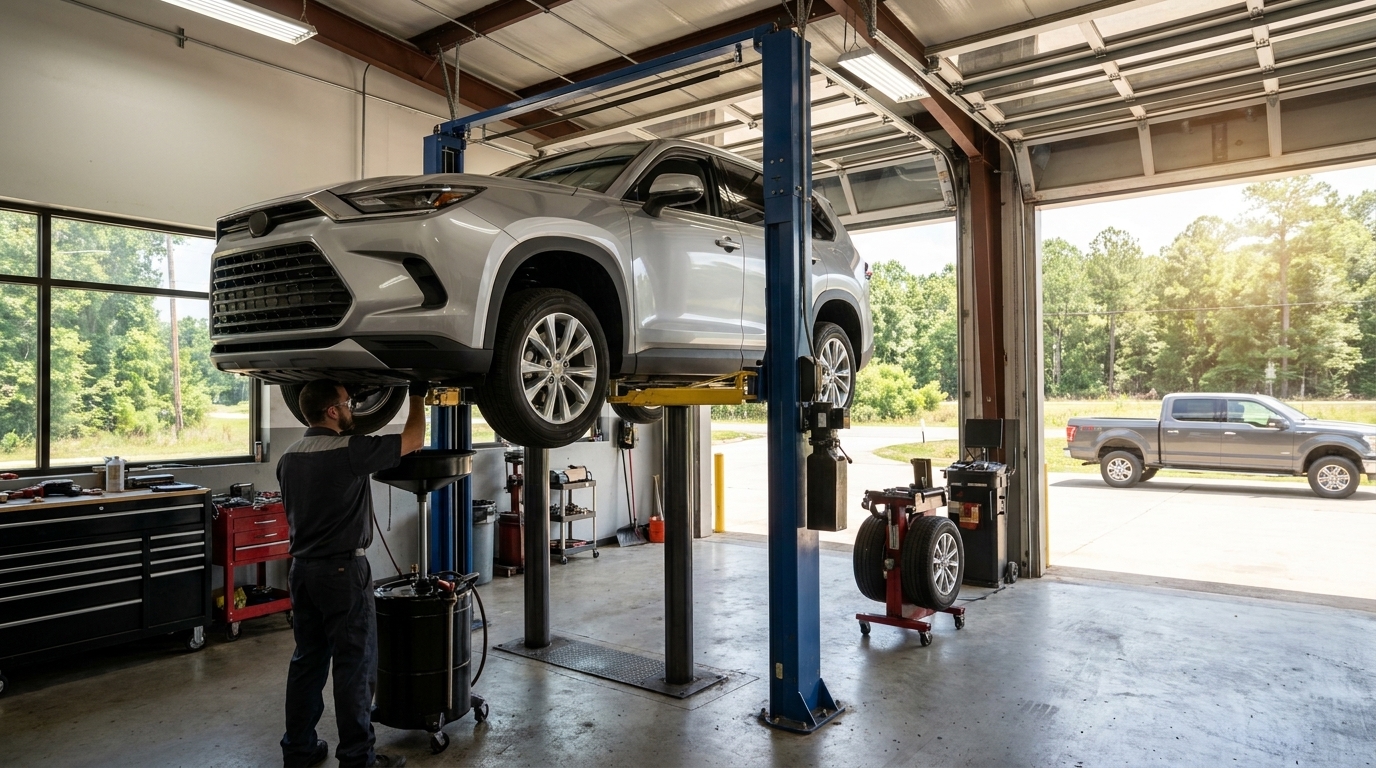
Get diagnosis from a Toyota-certified service department that uses Toyota's Techstream diagnostic software, not just a generic OBD-II reader. Auto parts stores can pull codes for free, but they can't interpret Toyota-specific sub-codes, freeze-frame data, or bidirectional test results — which is where most misdiagnoses happen and where owners waste money replacing parts that weren't actually failing.
Donalson Toyota's service department in Lumberton runs full Techstream diagnostics, and the dealership carries a 4.7-star rating across more than 1,110 Google reviews, with customers frequently citing thorough explanations and pressure-free service. One reviewer described the sales and service experience as "absolutely thorough explaining every part" — the same standard applies in the service bays. For Hardin County drivers who commute into Beaumont or down US-69, having the diagnosis done right the first time matters more than saving an hour at a parts counter.
Can you drive a Toyota with the check engine light on in Texas?
Yes, you can legally drive with a steady check engine light in Texas — but Hardin County, where Lumberton is located, is not currently in the Texas emissions inspection program, so the light won't fail your annual safety inspection. That said, driving with an unresolved code can mask a worsening problem and, if you sell the vehicle or move to an emissions county, an active code will fail inspection.
Confirm current inspection rules with the Texas Department of Public Safety before assuming your county's status hasn't changed. Even where emissions testing isn't required, an ignored code often turns a $200 sensor into a $2,000 converter.
Frequently Asked Questions
How much does a Toyota check engine light diagnostic cost?
A dealership diagnostic typically runs $120–$180 in the Lumberton area, and that fee is often applied toward the repair if you authorize the work. Chain auto parts stores will pull a generic code for free, but they cannot access Toyota-specific data, run bidirectional tests, or interpret freeze-frame information — which is why parts-store diagnoses frequently lead to unnecessary component replacements.
Will a loose gas cap really turn on my Toyota check engine light?
Yes. A loose, damaged, or missing gas cap is one of the most common triggers because it creates a leak in the evaporative emissions (EVAP) system. Tighten the cap until it clicks three times, then drive for 2–3 full trips. If the light doesn't clear within a few days, the cap seal or the EVAP purge valve likely needs replacement.
Can I reset the check engine light myself by disconnecting the battery?
You can, but you shouldn't. Disconnecting the battery clears the code without fixing the underlying issue, and it also erases learned transmission and idle data — which can cause rough shifting and stalling for the next 50–100 miles while the ECU relearns. The light will also return as soon as the fault reoccurs, usually within a few drive cycles.
How long can I drive with the Toyota check engine light on?
If the light is steady and the vehicle drives normally, most Toyotas can safely be driven for a week or two while you schedule diagnosis. If the light is flashing, stop driving as soon as safely possible — continued driving with an active misfire can destroy the catalytic converter within 20–50 miles and turn a small repair into a $1,500+ job.
Does the Toyota check engine light affect gas mileage?
Often, yes. Many of the sensors that trigger the light — oxygen sensors, mass airflow sensors, coolant temperature sensors — directly control the fuel-air mixture. A failed O2 sensor alone can cut fuel economy by 10–20%. If you've noticed a sudden drop in MPG along with the warning light, the diagnostic will usually point to an emissions or fuel-management component.
Should I go to a dealer or an independent shop for a Toyota check engine light?
For newer Toyotas under warranty, or for any vehicle where the code involves the hybrid system, transmission, or emissions components, a Toyota-certified dealership is the safer choice — factory diagnostic software and Toyota-trained technicians catch issues generic scanners miss. Independent shops can handle basic sensor and ignition repairs on out-of-warranty vehicles, but verify they have Toyota-specific tooling.
The Bottom Line for Lumberton Toyota Owners
A check engine light is information, not a verdict. Steady light: check the gas cap, watch for symptoms, get it scanned within the week. Flashing light: reduce load and get to service the same day. Skip the parts-store guess-and-replace cycle and get a proper Toyota diagnostic the first time — it's almost always cheaper.
Readers in Lumberton, TX who want the diagnosis handled by Toyota-certified technicians can reach Donalson Toyota at https://www.donalsontoyota.com/ to schedule service.