
Toyota Dealer Trade-In vs CarMax in Southeast Texas: Which Pays More?
Comparing a Toyota dealer trade-in vs CarMax in Southeast Texas? Here's how the 6.25% Texas sales tax credit changes the real math on your next vehicle.
You've decided to move on from your current Toyota, and you're trying to figure out where to sell it. Two paths sit in front of most Woodville, TX drivers: trade it in at a Toyota dealership, or drive it to a national instant-offer buyer like CarMax. On the surface, whichever check is bigger wins. In Texas, that math is incomplete — and it often points the wrong direction.
The missing variable is the Texas trade-in sales tax credit. Once you factor it in, a dealer offer that looks a few hundred dollars lower than an instant cash offer can end up putting more money in your pocket. Here's how to run the numbers honestly for a Southeast Texas transaction.
How the Texas Trade-In Tax Credit Actually Works
Texas imposes a 6.25% motor vehicle sales and use tax on the purchase price of a vehicle, as set under Texas Tax Code Chapter 152. That tax is collected by the dealer and remitted to the Texas Department of Motor Vehicles at the time of titling and registration.
The important part for anyone comparing offers: when you trade a vehicle in to a licensed dealer as part of the same transaction in which you buy your next vehicle, the trade-in allowance is subtracted from the sales price before the 6.25% tax is calculated. You only pay tax on the difference.
Sell your Toyota separately to an instant-offer buyer — or any third-party buyer — and that credit disappears. When you go to buy your next vehicle, you pay the full 6.25% on the entire purchase price. The cash is yours to keep, but there's no corresponding tax offset on the next car.
This is a jurisdiction-specific rule. Not every state works this way, but it's the rule that governs any deal titled in Tyler County or anywhere else in Texas.
Running the Real Math: A Southeast Texas Example
Say you're looking at a $35,000 replacement vehicle and your current Toyota is worth roughly $18,000 on the open market. Here's how the two paths compare in practice.
Scenario A: Trade In at the Dealer
- Purchase price of new vehicle: $35,000
- Trade-in allowance: $18,000
- Taxable amount: $17,000
Scenario B: Sell to a Cash Buyer, Then Buy
- Cash buyer offer (hypothetical, for illustration only): $18,500
- Purchase price of new vehicle: $35,000
- Taxable amount: $35,000
In this illustration, the cash buyer pays $500 more up front. But you also pay $1,125 more in sales tax. The dealer trade-in nets you about $625 more once tax is accounted for — even though the sticker offer was lower.
The break-even math is straightforward: multiply the dealer's trade-in offer by 6.25% (0.0625). That's the tax savings you capture only by trading in. For the third-party sale to actually pay more, the cash offer has to beat the dealer offer by more than that tax-savings figure. Anything less, and the dealer path wins.
When a Third-Party Sale Still Makes Sense
The tax credit is not a magic wand. There are situations where selling separately is the right call:
- You're not buying another vehicle. No purchase means no tax to offset. Take the highest cash offer.
- The third-party offer is dramatically higher. If a buyer offers thousands more than any dealer, the gap may exceed the tax savings. Run the numbers before assuming.
- Your trade-in exceeds the price of the replacement. Under Texas rules, excess trade-in value doesn't generate a refund or carryover credit. If your trade is worth more than what you're buying, the credit caps out.
- The transaction involves a family transfer or gift. Those fall under different provisions of Texas Tax Code Chapter 152 and aren't governed by trade-in credit rules.
For most Woodville-area Toyota owners upgrading to a newer Toyota, though, none of these apply. The tax math favors the dealer path.
What Southeast Texas Owners Should Know About Timing
Trade-in values in the Piney Woods region move with the seasons and with what's happening on ranch and worksite roads. Trucks and SUVs — Tacomas, Tundras, 4Runners, RAV4s — tend to hold value strongly in this part of the state because demand stays steady year-round. Sedans can soften more in summer when fuel prices spike and buyers pivot.
A few practical timing notes for the Woodville and greater Tyler County market:
- Pre-hurricane-season months often see stronger used-truck demand across Southeast Texas as buyers replace aging haulers before storms arrive.
- Vehicles with clean service records fare better in this rural market, where buyers know a well-maintained Toyota can run past 200,000 miles.
- If you commute on US-69 or US-287 and have highway-heavy mileage, be upfront about it — appraisers will find out anyway, and honesty tends to produce a firmer offer.
How to Get the Strongest Dealer Trade-In Offer
The tax credit only helps if the dealer's underlying offer is competitive. A few steps to make sure it is:
- Get a starting value first. Donalson Toyota's online trade-in tool gives you a starting number. If you also have a written cash offer from another buyer, bring it with you.
- Clean the vehicle inside and out. A detailed truck appraises better than a dirty one. It signals care.
- Gather service records. Toyota buyers in Southeast Texas value documentation. If your dealership has done the maintenance, the records are already in the system.
- Handle small fixes. A burned-out bulb or missing floor mat costs more in appraisal deductions than the fix itself.
- Ask for the trade-in offer and the purchase price separately. Don't let them get blended into one payment number. You need both figures to run the tax math.
The Toyota Trade-In Process in Woodville
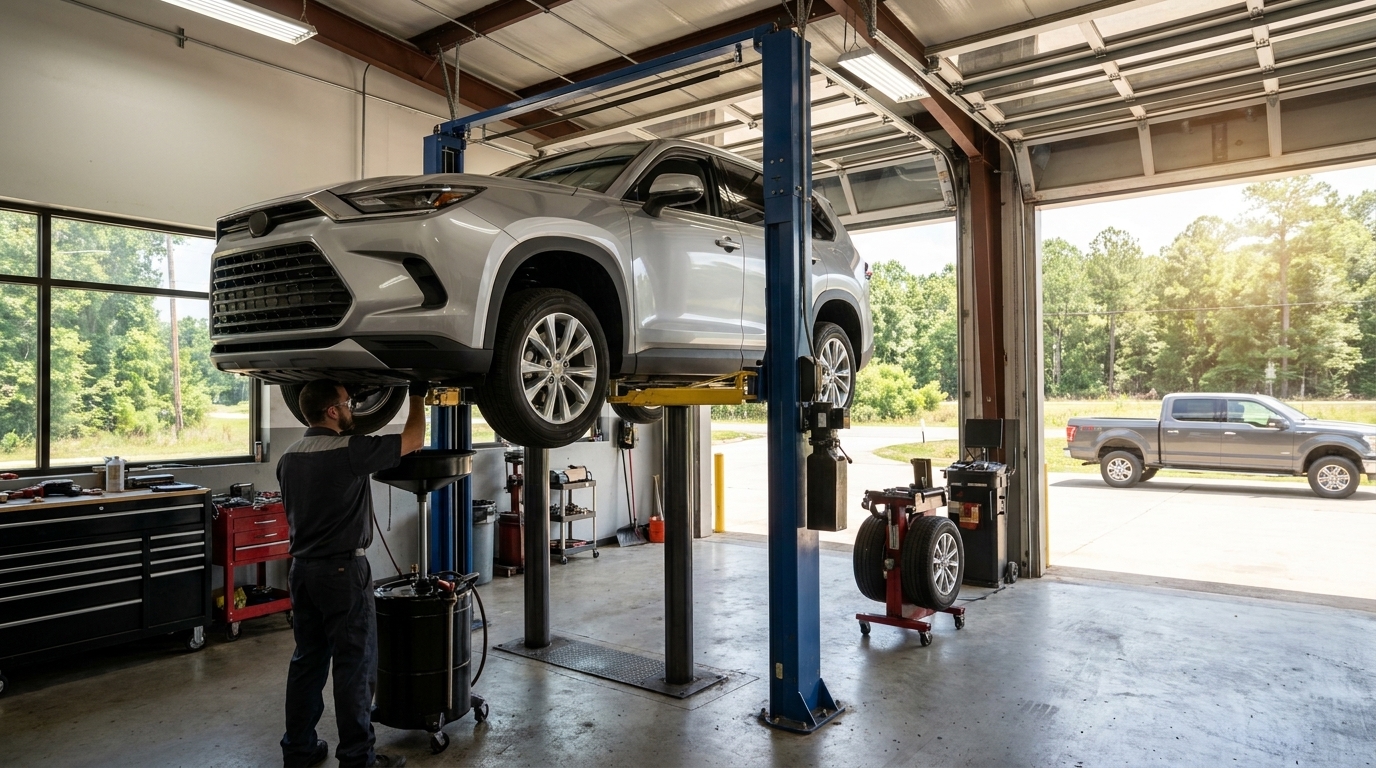
At a local Toyota dealership, the trade-in process typically runs in one visit: a used-vehicle manager appraises the vehicle, confirms condition and mileage, checks the market, and presents a written offer. If you're purchasing that day, the trade-in allowance is applied to the buyer's order and the taxable sales price reported to TxDMV reflects the deduction.
The dealer handles the title paperwork, the tax remittance, and the payoff on any remaining loan on your trade. You sign, you drive, you're done.
FAQ: Toyota Trade-In vs CarMax in Texas
Does the Texas trade-in tax credit apply if I sell to a cash buyer and buy from a dealer the same day?
No. The trade-in must be accepted by the selling dealer as part of the same transaction. A separate prior sale to a third party — even the same day — doesn't qualify for the credit.
What if my Toyota is worth more than the vehicle I'm buying?
Under Texas rules, excess trade-in value doesn't generate a refund or carry forward to a future purchase. The credit is capped at the purchase price of the replacement vehicle.
Where do I actually pay the sales tax?
. The taxable amount on your title application reflects the trade-in deduction if you traded in.
Is the 6.25% rate the same everywhere in Texas?
The state motor vehicle sales and use tax rate is 6.25% statewide under Texas Tax Code Chapter 152.
The Bottom Line for Woodville Toyota Owners
If you're selling a Toyota and buying another vehicle in Texas, the trade-in tax credit is a real, quantifiable advantage that instant-offer services can't match. Do the math both ways — but do it with tax included, not just the headline offer.
Drivers in Woodville, TX who want a straightforward appraisal and a transparent comparison against any outside offer can start with Donalson Toyota's online trade-in valuation or call 409-405-6503 to set up an in-person appraisal. Bring any written cash offer you have — the tax math is the same either way, and it's better to see it on paper before you decide.
This article summarizes Texas motor vehicle sales tax rules for general informational purposes and does not constitute legal or tax advice. For transaction-specific guidance, consult the Texas Comptroller or a qualified tax professional.