
Is It Better to Lease or Finance a Toyota in Silsbee, TX?
Lease vs. finance a Toyota in Silsbee, TX? Compare payments, taxes, mileage, and ownership tradeoffs with a clear, Texas-specific buyer's guide.
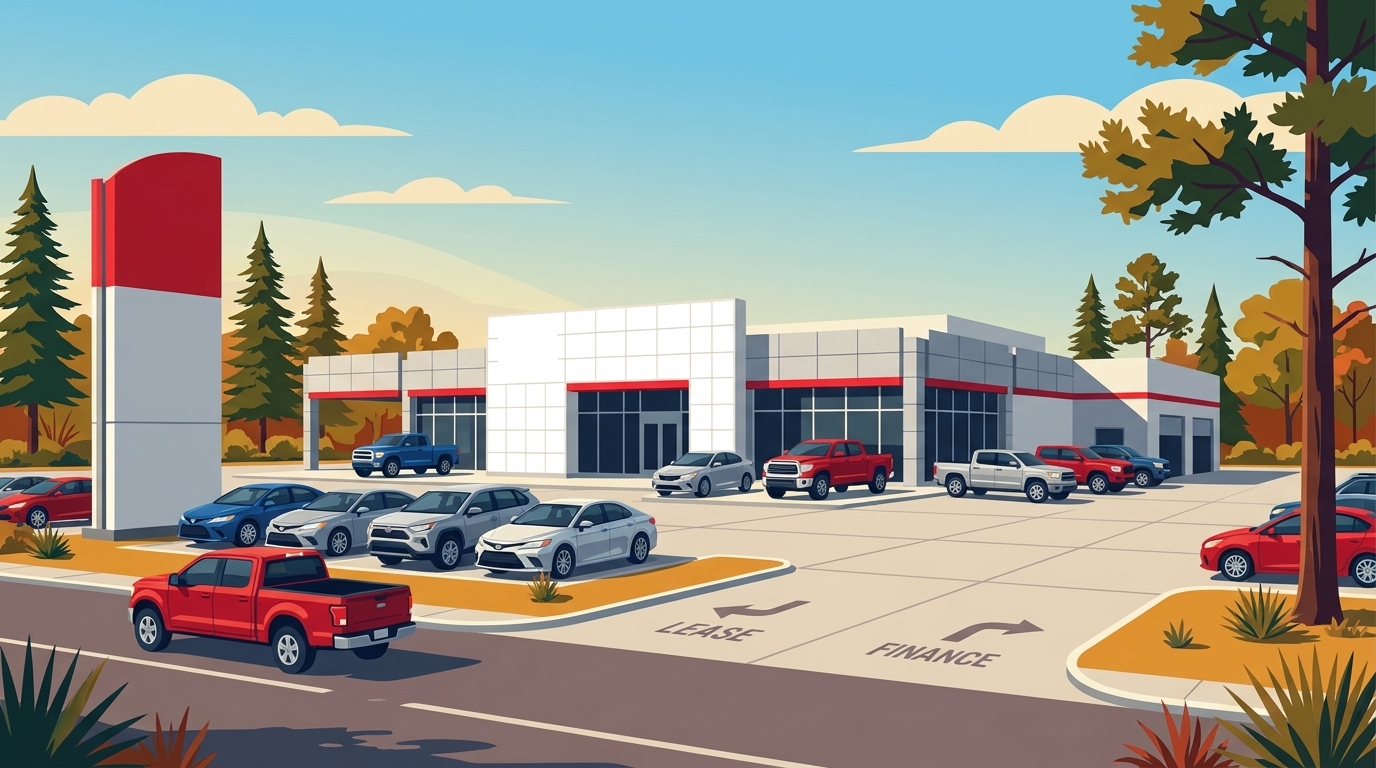
You're ready for a new Toyota. But before you pick the color, you have to answer a bigger question: lease or finance? In Silsbee, the right answer depends on how you drive, how long you keep vehicles, and how Texas taxes each option.
Here's a straight-talking breakdown built for Hardin County drivers — including the tax rules that actually apply here, not the generic advice you'll find on national sites.
The Short Answer
Financing usually wins if you drive a lot of miles, keep your vehicles for 6+ years, or want to build equity. Leasing usually wins if you like a new Toyota every 2–3 years, drive predictable miles, and prefer lower monthly payments.
That's the headline. The details are where Silsbee shoppers can save real money.
How Financing a Toyota Works in Texas
When you finance, you take out a loan, pay it off over 36–72 months, and own the vehicle at the end. In Texas, you pay a 6.25% motor vehicle sales tax on the total consideration at the time of title application — that's per Texas Tax Code § 152.021(a), and it's due within 30 days of purchase.
That tax is typically rolled into your loan, so you finance it alongside the vehicle price. Your monthly payment covers principal, interest (your APR), and any add-ons you choose.
Retail installment contracts in Texas have to disclose your APR, finance charge, amount financed, total of payments, payment schedule, and any credit insurance — that's required under 7 TAC Chapter 84 (the OCCC rules) and federal Truth in Lending. Before you sign, read those numbers. They're on the contract for a reason.
Financing makes sense if you:
- Drive more than 12,000–15,000 miles a year (common for commuters heading toward Beaumont on US-96)
- Keep vehicles until they're paid off — or longer
- Want to modify, customize, or eventually sell the vehicle yourself
- Value building equity over lower monthly payments
How Leasing a Toyota Works in Texas
Leasing is a long-term rental. You pay for the depreciation during your lease term, not the full vehicle. That's why lease payments are typically lower than finance payments on the same Toyota.
Here's where Texas gets interesting. Leased vehicles aren't subject to the 6.25% sales tax the same way purchases are. Instead, they fall under motor vehicle rental tax under Texas Tax Code §§ 152.022–152.026 — collected by the lessor on gross rental receipts. In practice, how that tax flows through to your monthly payment depends on how the lessor structures it, and the pre-lease disclosures will spell it out.
Speaking of disclosures: federal Regulation M, which implements the Consumer Leasing Act, requires your lessor to give you written pre-lease disclosures before you sign. Those include amount due at signing, number and amount of payments, total of payments, residual value, purchase-option price, early termination charges, and wear-and-tear standards. Read them the same way you'd read a loan contract.
Leasing makes sense if you:
- Want a new Toyota every 2–3 years with the latest safety tech
- Drive predictable, moderate miles (typical lease caps are 10,000–15,000/year)
- Prefer lower monthly payments over ownership
- Don't want to deal with selling or trading later
The Buyout Question at Lease End
A lot of Silsbee drivers ask: what if I love the Toyota and want to keep it?
You can. Most leases include a purchase option. But here's the Texas-specific catch — when you exercise that option, the buyout is treated as a retail sale, and you owe the 6.25% motor vehicle sales tax on the option purchase price at title transfer, under Tax Code Chapter 152.
So if you're 70% sure you'll want to keep the vehicle, financing from the start is usually cleaner. If you're genuinely unsure, leasing gives you flexibility — you just accept the tax event at buyout.
Monthly Payment Comparison: What to Actually Look At
Don't just compare the lease payment to the finance payment. Compare the full picture:
- APR on financing — Toyota Financial Services often runs promotional rates on specific models. Ask what current APRs are available on the trim you want.
- Money factor on leasing — the lease equivalent of interest. Multiply by 2,400 to get the approximate APR equivalent.
- Amount due at signing — sometimes $0, sometimes a few thousand. Lower isn't always better; it just moves cost around.
- Residual value — the higher the residual, the lower your lease payment. Toyotas historically hold value well, which is why leases on models like the RAV4, Tacoma, and Camry can pencil out favorably.
- Mileage cap — overage fees add up fast if you underestimate.
Silsbee-Specific Considerations
A few local realities that should factor into your decision:
Driving distances. Silsbee sits in the Piney Woods, and many residents commute toward Beaumont, Lumberton, or Kountze for work. If you're logging 60+ miles a day, a lease's mileage cap can become expensive quickly. Financing gives you unlimited miles — the vehicle just depreciates faster, but that's your problem to manage, not a per-mile penalty.
Weather and road conditions. East Texas gets heavy rain, occasional tropical weather, and the odd hard freeze. Leased vehicles have to be returned in good condition minus normal wear — hail damage, curb rash, and interior wear beyond standard guidelines can trigger charges. If you park outside and drive on rural roads, that's worth thinking about.
Truck ownership culture. If you're buying a Tundra or Tacoma and plan to tow, haul, or put it to real work, financing almost always makes more sense. Trucks used hard rarely come back within lease wear standards, and Texas truck owners tend to keep vehicles well past the loan payoff.
Registration and titling. Whether you lease or finance, expect title and registration fees on top of your tax obligation. Your dealer handles the paperwork with TxDMV, and Texas dealers are required to retain those records under 43 TAC § 215.178.
Frequently Asked Questions
Is the sales tax cheaper if I lease in Texas?
Not necessarily. Leasing shifts the tax structure from a one-time 6.25% sales tax at purchase to motor vehicle rental tax collected on the lease payments. Whether that ends up cheaper depends on the lease term, residual, and how the lessor structures the tax pass-through. Ask for a side-by-side quote.
Can I end a Toyota lease early?
Yes, but there are early termination charges — those are required to be disclosed in your pre-lease paperwork under Regulation Z. They can be substantial. If there's any chance you'll need out early, financing is more flexible.
What credit score do I need to lease or finance a Toyota?
Both leases and loans use your credit profile to set your rate (APR) or money factor. Higher scores get better terms. Toyota Financial Services works across a range of credit tiers, and your dealer can shop lenders on your behalf.
Does Toyota offer better deals on leasing or financing?
It varies by model, month, and inventory. Toyota Financial Services frequently rotates promotional APR offers on financing and subsidized money factors on leases. The best answer for your situation is a current quote on the specific trim you want.
Making the Call
If you want the lowest monthly payment and a new Toyota every few years, lease. If you drive a lot, plan to keep the vehicle, or want to build equity, finance. If you're torn, run both quotes on the same vehicle and compare the true monthly cost — not just the payment, but the tax treatment, mileage terms, and what happens at the end.
Silsbee drivers who want to walk through both options side by side can reach Donalson Toyota at https://www.donalsontoyota.com/ to see current lease and finance offers on the Toyota you're considering. Bring your annual mileage estimate and how long you typically keep vehicles — those two numbers do most of the work in picking the right path.